
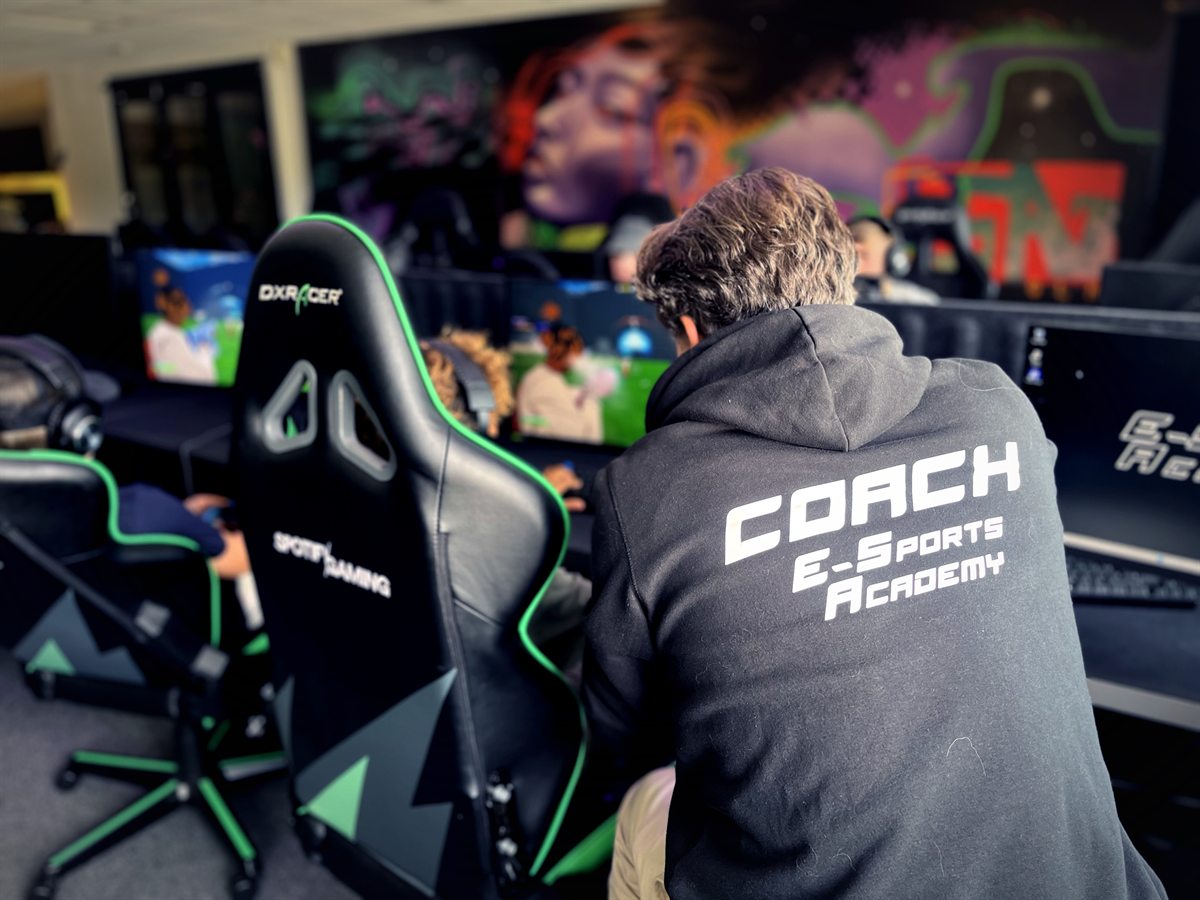
Gaming can be entertainment, competition, creativity and relaxation. For many children, it is also an important social activity. A child sitting alone at a computer may still be talking, laughing and cooperating with several friends.
At the same time, gaming can take up too much space, just like other interests and activities can.
The aim of this page is not to decide whether gaming is good or bad. We want to help you understand what your child is actually doing, what gaming means to them and how you can create reasonable boundaries around it.
Children are different, and the advice needs to be adapted to their age, maturity and everyday circumstances.
OUR VIEW ON GAMING
GAMING IS MORE THAN THE GAME
Gaming is a major interest for many children and young people. For us, the game is the activity itself – but it is not the only thing that matters.
Around the game there is also community, communication, cooperation, problem-solving, setbacks, success and the opportunity to develop alongside other people.
That wider picture is what we want to make use of in our activities.
MORE THAN WHAT HAPPENS ON SCREEN
We do not think the purpose of organised esports for children and young people should simply be to make someone better at Fortnite, Counter-Strike or another game.
The game is the activity, but many other things happen around it. Participants need to cooperate, communicate, solve problems, deal with both winning and losing and function as part of a group.
For many young people, gaming is also a strong interest and a natural way into a community.
NOT EVERYONE HAS TO WANT TO COMPETE
Taking gaming seriously does not mean that everyone has to want to compete or become an elite player.
One person wants to improve at their game. Another wants to compete. Someone else mainly wants to meet friends and have an enjoyable activity to attend.
There should be room for all of those motivations in organised esports.
Gaming does not have to become all about performance simply because it becomes organised.
A GOOD PLAYER IS ALSO A GOOD TEAMMATE
We want to develop more than mechanical skill.
In a group, participants need to communicate, listen, help each other, take responsibility and treat other people with respect.
Learning to win without putting other people down, and to lose without ruining the experience for the team, are also skills that can be practised.
That is why leadership in esports is not only about what happens in the game. It is also about how participants behave and work together with others.
GAMING NEEDS TO FIT INTO A BIGGER EVERYDAY LIFE
Our aim is not to encourage children and young people to play as much as possible.
Like any other leisure interest, gaming needs to fit alongside sleep, school, physical activity, family, friends and other parts of life.
Our role is not to replace the boundaries families set at home. Our role is to create a positive environment around the time that is actually spent gaming.
WHAT WE WANT TO CREATE
Community
Gaming can be a way to make new friends and become part of a group where there is already a shared interest.
Development
There should be opportunities to improve – both in the game and in areas such as communication, teamwork, responsibility and dealing with setbacks.
A safe environment
Children and young people should meet adult leaders and be part of an environment where treating others with respect is a natural part of the activity.
Fun
For most people, gaming starts because it is fun. Organised esports should not take the enjoyment out of playing.
WHY ORGANISED ESPORTS?
Playing at home and taking part in organised esports are not opposites.
At home, a child can play with friends, explore games and improve independently. In an organised activity, there can also be leaders, structure, recurring groups and opportunities to develop alongside other people.
What we particularly want to create are the things that can be harder to find when playing alone at home: community, leadership, structure and opportunities to develop together.
E-SPORTS ACADEMY AND SPAWN POINT
E-Sports Academy's gaming centre in Gustavsberg is a venue built for gaming and esports. It hosts activities, school holiday programmes, events and other gaming experiences.
The recurring esports training groups are run by the independent nonprofit club Spawn Point E-sportförening.
E-Sports Academy and Spawn Point work together around the venue, equipment and practical arrangements, but they are two separate organisations.
A GUIDE FOR PARENTS
PRACTICAL ADVICE FOR GAMING IN EVERYDAY LIFE
Here we have brought together practical advice, questions and examples about screen time, sleep, conflict, online safety, in-game purchases and how to talk to your child about gaming.
GAMING IN EVERYDAY LIFE
It is easy to focus on the question of how many hours a child spends gaming. But the number of hours in front of a screen does not tell you everything.
Look at how everyday life is working as a whole. Is there enough room for sleep, school, meals, physical activity, family, friends and the things your child needs to do?
Gaming can be social, engaging and important to a child. At the same time, even an enjoyable interest can sometimes take up too much space. The wider picture matters.
1177 also describes games and online chats as environments that can play an important social role in the lives of children and young people.
ASK WHAT YOUR CHILD IS ACTUALLY DOING
You could ask:
What do you usually do when you play?
Who do you play with?
Is it mainly a way to relax, spend time with friends or try to improve?
Those questions often tell you more than simply asking how many hours your child has spent at the computer.
SCREEN TIME AND BALANCE
These are useful guidelines to be aware of, but the number of minutes is not the whole picture.
It is also important to look at whether screen use is starting to push aside things your child needs in order to feel well and function in everyday life, such as sleep, school, physical activity, meals, relationships and other interests.
The guideline does not need to be treated as a test that the family has "failed" if a child spends longer on a screen on an occasional day. Look at the pattern over time and at how the rest of everyday life is working.
LOOK AT THE WHOLE PICTURE
For example, ask:
- Is your child getting enough sleep?
- Are they keeping up with school?
- Are they eating regularly?
- Is there time for physical activity and other interests?
- Are their relationships working well?
- Can they do other things without gaming constantly taking over?
The point is not that everything has to be perfect before a child is allowed to play.
The point is to understand how gaming fits into the rest of their life.
TALK ABOUT SCREEN TIME – DON'T JUST SET THE LIMIT
Younger children often need adults to set fairly clear boundaries. As children get older, it can make sense to involve them more in deciding how the rules should work – without that meaning they make every decision themselves.
A simple place to start might be:
How much gaming time do you think is reasonable on a normal school day?
Then you could ask:
What time do you think it is reasonable to stop in the evening?
What do you think should be finished before you start playing?
Is there a particular day when it is especially important to you to be able to play for longer?
Your child's answers do not have to become the family's rules.
But they can help you understand what actually matters to your child.
Perhaps your child thinks two hours is perfectly reasonable on school days but really wants to play for longer with friends on Friday evenings. That gives you something specific to discuss.
EXPLAIN WHY THE RULE EXISTS
"Because I said so" may end an argument, but it does not help a child understand why a boundary exists.
You could instead say:
I want you to be able to play. But you also need enough sleep, regular meals, time for schoolwork and time for other things. We need to find a balance where all of that can fit.
The goal does not have to be as little gaming as possible. The goal is an everyday routine where gaming can fit alongside sleep, school, physical activity, relationships and other important parts of life.
SLEEP AND THE LAST MATCH
This is where many familiar conflicts begin.
The parent says:
Time to turn it off.
The child replies:
I can't! I'm in the middle of a match!
And sometimes that is genuinely true.
Many online games cannot be paused. Leaving halfway through a match can put the rest of the team at a disadvantage, and some games may also penalise players who leave.
That does not mean a child should always be allowed to continue until the match ends, regardless of the time.
But rules tend to work better when they take account of how the games actually work.
DECIDE WHEN THE LAST MATCH CAN START
A rule can cover both the final stopping time and the latest time a new match may begin.
No new match after 20:30. The computer is off by 21:00.
The times are only an example.
This gives the child an opportunity to start learning how to plan the end of a gaming session themselves.
It is also easier to accept "that was the last match" when everyone knew it before the match started.
GIVE SOME WARNING
For younger children, a simple warning can make a big difference.
Half an hour left.
Then:
Fifteen minutes left. Don't start a long match now.
Finally:
This one needs to be your last match.
Sudden transitions are often harder than something a child has had time to prepare for.
SCREENS AND SLEEP
The Public Health Agency of Sweden recommends putting screens away 30–60 minutes before bedtime and leaving mobile phones, tablets and similar devices outside the bedroom during the night.
That does not mean every family needs exactly the same evening routine. But sleep is a sensible place to start if screen use is regularly becoming a problem.
RULES, AGREEMENTS AND CONFLICT
MAKE THE RULES SPECIFIC
Rules work better when everyone understands what they actually mean.
"Don't play too much" is difficult to interpret. It is clearer to agree on things such as when gaming can start, when the last match may begin, what needs to be done first and whether different rules apply on school days and weekends.
Let your child suggest what they think would be reasonable. That does not mean they decide everything, but it can make the rules easier to understand and follow.
MAKE AGREEMENTS WHEN YOU ARE NOT ARGUING
Try to talk about rules when nobody is angry and nobody is in the middle of a match.
If the same argument happens night after night, it is often better to discuss it at a calm moment rather than trying to solve everything while the conflict is happening.
Ask your child what they think a workable solution could look like. You do not have to agree, but it can help you understand what is actually causing the conflict.
TRY IT, REVIEW IT AND CHANGE IT
An agreement does not have to last forever.
Decide what you want to try and review it after, for example, two weeks. What worked? What was difficult? Does anything need to change?
It can help to write down the most important rules if family members often remember the agreement differently.
Consequences may sometimes be necessary, but they tend to work best when they are understandable, predictable and connected to what has happened.
PEGI, AGE RATINGS AND GAME CONTENT
PEGI helps parents and guardians understand what kind of content a game contains and the age at which that content is considered suitable.
The rating is not a measure of how difficult the game is.
PEGI uses the age ratings 3, 7, 12, 16 and 18 together with content descriptors covering areas such as violence, bad language, fear, sexual content, drugs, gambling and in-game purchases.
So do not look only at the number.
Look at why the game received that rating as well.
"BUT EVERYONE ELSE IS ALLOWED TO PLAY"
This is a common and sometimes difficult conversation.
You might start by asking:
Who exactly is "everyone"?
Is this a game your whole group of friends plays together?
What happens for you when everyone else is playing and you cannot join them?
For the child, the issue may be just as much about being included with friends as it is about the game itself.
Understanding the social importance does not mean you have to change your decision.
It simply means you are discussing the right issue.
LOOK AT THE GAME TOGETHER
If you do not know the game, ask your child to show you.
Can you show me what you do in the game?
What do you enjoy about it?
Do you know why the game has this PEGI rating?
It is often easier to make a decision about a game you have actually seen.
If the answer is still no, you could say:
I'm not saying no because gaming is bad. I don't think the content of this particular game is right for you yet.
VOICE CHAT, ONLINE FRIENDS AND SAFETY
WHO DOES YOUR CHILD PLAY WITH?
Ask who your child normally plays with and how they know each other.
They might be classmates, relatives, people they have met through a game or a mixture of all three.
Try to understand the relationships first, before turning the conversation immediately towards risks.
ONLINE FRIENDSHIPS CAN BE IMPORTANT
A friend your child has only ever met online can still be an important friend.
If children feel that adults automatically dismiss online friends as "not real", they may also find it harder to talk about it if something later starts to feel wrong.
Show an interest in those relationships in much the same way as you would ask about other friends.
BLOCKING, REPORTING AND PERSONAL INFORMATION
It is useful for children to know how to block and report another player before they ever need to do it.
Talk about which information is sensible to keep private, such as their home address, school, phone number, passwords and other information that could be used to identify or contact them outside the game.
Consider going through these functions together in the games and services your child uses most.
WHEN AN ADULT NEEDS TO RESPOND
Take it seriously if someone pressures your child to keep things secret, asks for private pictures or information, threatens or harasses them, or tries to move the conversation somewhere that feels inappropriate.
One of the most important things is for your child to feel that they can tell you what happened without automatically being punished for having spoken up.
PARENTAL CONTROLS AS SUPPORT
Parental controls can be a useful tool, particularly for younger children. But technology works best alongside clear rules and conversations – not instead of them.
Controls can, for example, be used for:
- Purchases and purchase approval
- Screen or gaming time
- Age restrictions
- Who your child can communicate with
- Certain functions in games and apps
The appropriate level of control depends on your child's age, maturity and circumstances. As children get older, it may be natural to give them more responsibility gradually.
The Swedish Agency for the Media provides practical guides for many common platforms, games and services.
MONEY, SKINS AND IN-GAME PURCHASES
Digital items can seem difficult for an adult to understand.
Why pay money simply to change how a character looks?
For a child, the answer may not be very different from wanting a particular shirt, football card or accessory.
A skin is usually a cosmetic appearance for something such as a character, weapon or other in-game item.
A battle pass is a system that allows a player to unlock different rewards over a period of time by playing.
Many games also use their own virtual currencies, such as Robux in Roblox or V-Bucks in Fortnite.
CONVERT IT BACK INTO REAL MONEY
Virtual currencies can make the real cost feel abstract.
Try asking:
How much does that cost in Swedish kronor?
Then:
If this were sitting on a shelf in a shop for the same amount of money, would you still want to buy it?
That is not automatically a way of saying no.
It is a way of helping a child understand that digital money is still real money.
A BUDGET CAN REDUCE REPEATED ARGUMENTS
Instead of having twenty separate conversations that begin with:
Can I buy this?
a family could agree on an amount of money available for digital purchases.
The question then becomes:
Do you want to spend your gaming budget on this, or save it for something else?
For younger children, every purchase may of course still require an adult's approval.
ADD A LITTLE FRICTION
For larger purchases, a family might have a rule such as:
Anything over X kronor waits until tomorrow.
Each family decides what X means for them.
The point is to create some time between the impulse and the purchase, particularly when a game uses limited-time offers.
PURCHASE APPROVAL FOR YOUNGER CHILDREN
Consider using a PIN or purchase approval for younger children, even if you have already agreed on a budget.
It reduces the risk of both misunderstandings and impulse purchases.
LOOT BOXES AND OTHER RANDOM REWARDS
Some games include systems where the player pays without knowing in advance exactly which reward they will receive.
The Swedish Agency for the Media's Kollaspelet guide contains more information about virtual currencies, microtransactions, loot boxes and design features that can encourage additional purchases.
RANK, COMPETITION AND FRUSTRATION
Competitive games can create strong emotions.
That is not so different from a child becoming frustrated after losing a football match.
Many games use a rank – a system that places players at different competitive levels based on their results.
Tilt is gaming slang for the point where frustration starts to affect a player's decisions and performance.
It is okay to feel disappointed, frustrated or angry when something goes badly. But emotions and behaviour are not the same thing. Feeling frustrated does not make it acceptable to shout at other people, break things or ruin the experience for the team.
DON'T TRY TO SOLVE EVERYTHING IN THE MIDDLE OF THE ANGER
Immediately after losing an important match is rarely the ideal time for a long conversation about behaviour.
If the situation is not dangerous, you could say:
I can see that you're really angry. We'll talk about this when you've calmed down.
Later you could ask:
What was it that made you so angry?
When did you notice that you were starting to lose control?
What might help next time?
AGREE ON BREAK RULES WHEN EVERYONE IS CALM
For example:
If you notice that you're starting to shout at your team, take a ten-minute break before starting another match.
A rule like that is much easier to discuss on a calm afternoon than in the middle of an argument.
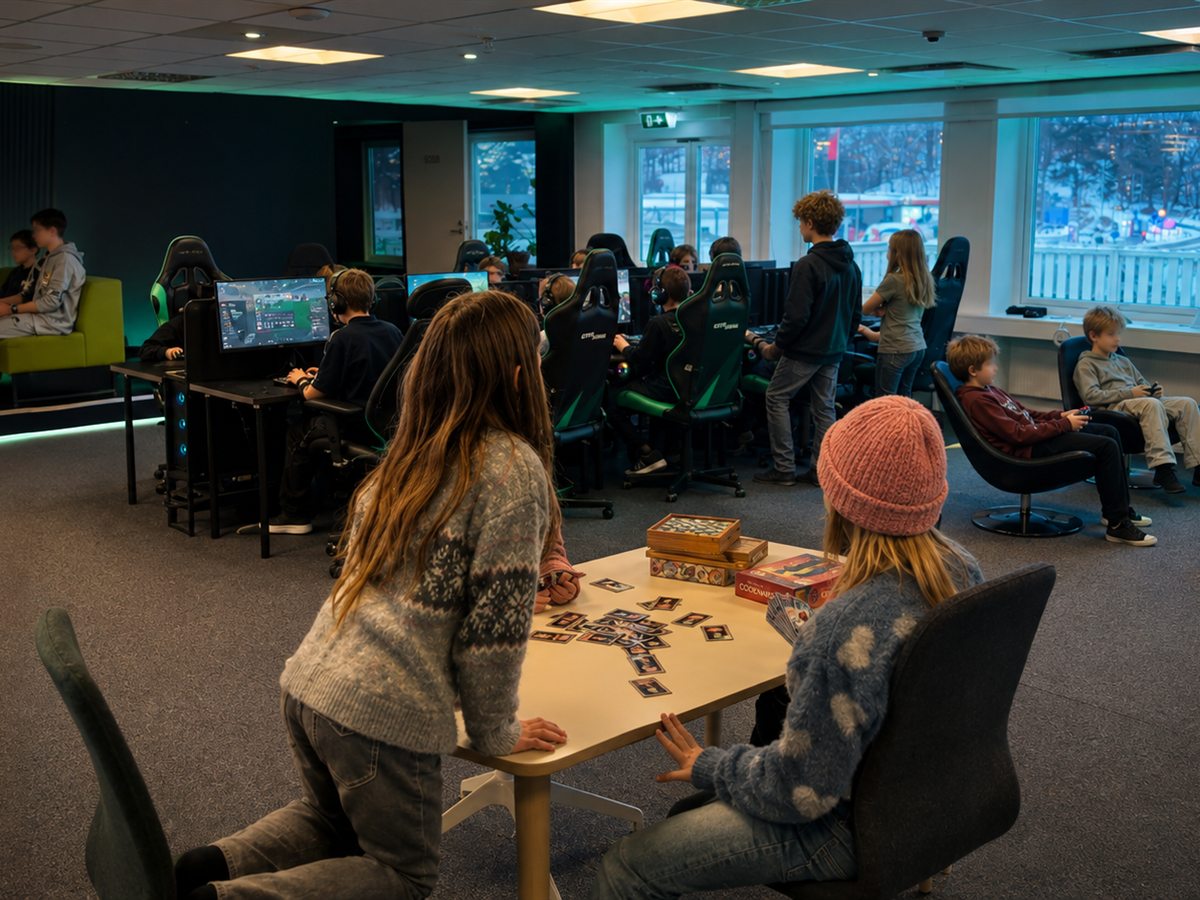
GAMING AS A SOCIAL ACTIVITY
A parent might see:
Another two hours in front of the computer.
The child experiences:
This is the only evening when the whole group can play together.
Both can be true.
For many children, gaming is a way of spending time with friends.
The fact that gaming is social does not mean it stops counting as screen time or that other needs disappear.
But it may affect how a family chooses to plan that time.
ASK WHAT IS ACTUALLY HAPPENING
Have you actually arranged to play together tonight?
Is this when the whole group is online?
Or are you mostly playing on your own at the moment?
Sometimes planned gaming with several friends can be treated a little more like another planned social activity.
There can still be a finishing time – but with an understanding of what the child is actually doing.
"GO AND DO SOMETHING ELSE" IS NOT ALWAYS A SOLUTION
If a child has nobody to meet and nothing else they are looking forward to, it can be very difficult for another activity to compete with the computer.
Try asking:
If you were going to spend a little less time gaming, what would you actually like to do instead?
The answer might be football, baking, meeting a friend, going swimming, playing a board game or something completely different.
Less gaming does not automatically create a better leisure time.
Sometimes a child also needs help finding something they would genuinely like to do instead.
BREAKS AND EVERYDAY ROUTINES
Long gaming sessions can easily become longer than intended.
Natural breaks can help create more variety during the day.
It can be as simple as:
- eating dinner away from the computer
- getting some water
- moving around
- going outside for a while
- doing something else between two longer gaming sessions
The Public Health Agency of Sweden emphasises that screen use should not displace things such as sleep, physical activity, relationships and other activities.
ADULTS' SCREEN USE COUNTS TOO
It is harder to argue for phone-free meals if all the adults at the table are looking at their phones.
Adults do not need to have exactly the same rules as children.
But children notice how adults use screens.
Screen-free situations within the family are often easier to understand if the adults take part as well.
START WITH CURIOSITY
One of the simplest things a parent can do is talk about gaming when there is no problem to solve.
If every conversation about Fortnite begins with:
You've been playing for too long.
your child may quickly start to associate your interest in gaming with criticism.
So sometimes ask simply because you want to understand.
Ask the question because you genuinely want to hear the answer – not because you want to prove a point.
IF YOU WANT TO UNDERSTAND THE GAME
What do you enjoy most about it?
What are you usually trying to improve at?
Can you show me how it works?
IF YOU WANT TO UNDERSTAND THE SOCIAL SIDE
Who do you normally play with?
How do you know each other?
What do you usually do when you play together?
IF YOU WANT TO TALK ABOUT SCREEN TIME
Do you think you have enough time for the things you need to do?
Which part of your screen time would be easiest to reduce?
How can I help without simply nagging you?
IF YOU WANT TO TALK ABOUT MONEY
How much does this actually cost in real money?
What is it about this particular item that makes you want it?
Do you think you'll still want it tomorrow?
IF YOU ARE WORRIED ABOUT SOMETHING ONLINE
Has anyone online ever said something that made you uncomfortable?
Do you know what to do if somebody behaves badly?
Is there anything online that you would find difficult to tell me about?
LET YOUR CHILD TEACH YOU
Try saying:
I genuinely don't understand how this game works. Can you teach me?
You do not need to become good at the game.
You do not even have to enjoy it.
For your child, though, showing you a game they care about may be a little like showing you their football training, their horse or their favourite band.
And if you later need to have a more difficult conversation, you have already started building a shared language.
WHEN GAMING STARTS TO AFFECT EVERYDAY LIFE
One week with a lot of gaming does not necessarily mean that something is wrong.
It may be the school holidays. A new game may just have been released. Perhaps the whole friendship group is playing the same thing.
There is more reason to pay attention when problems become recurring and gaming is clearly beginning to affect areas such as sleep, school, wellbeing, relationships or the child's ability to do other things.
SOMETIMES GAMING IS THE PROBLEM – SOMETIMES IT IS A SIGNAL
A child may spend a great deal of time gaming because the gaming itself has become difficult to limit.
But a child may also retreat further into games because something else in everyday life is difficult.
Gaming can become a place where the child relaxes, feels competent or gets a temporary break from thinking about something difficult.
That is why it can sometimes be useful not only to ask:
How do we get you to play less?
But also:
How are you actually feeling at the moment?
Has anything become more difficult recently?
Is there something that makes you prefer being in the game?
That does not mean that boundaries disappear.
It means trying to understand which problem you are actually trying to solve.
WHEN YOU WANT MORE SUPPORT
Every family has conflicts sometimes.
But if the problems are significant or continue for a long time, a family does not have to solve everything on its own.
1177 recommends contacting a healthcare centre if, for example, there are frequent arguments about screen time, the child is feeling unwell, or screen use appears similar to an addiction.
For school-age children, the school's student health service can also be a natural place to seek support.
You can also call 1177 for healthcare advice and help finding the appropriate care.
E-Sports Academy is not a healthcare provider and cannot assess or treat problematic gaming.
The information on this page is intended as general information and practical support for conversations at home.
MORE INFORMATION AND PRACTICAL GUIDES
- THE PUBLIC HEALTH AGENCY OF SWEDEN Current recommendations on children's and young people's screen use, sleep, balance and conversations about screens at home.
- SWEDISH AGENCY FOR THE MEDIA Practical guidance on digital safety, parental controls, communication and purchases on common platforms and in games.
- Kollaspelet A guide for adults about games, virtual currencies, microtransactions, loot boxes and different design mechanisms.
- PEGI Official information about game age ratings and content descriptors.
- 1177 Information about children and screen use, including guidance on when it may be appropriate to seek additional support.