What is the focus?
Communication, roles, abilities, tactics and team play.

VALORANT
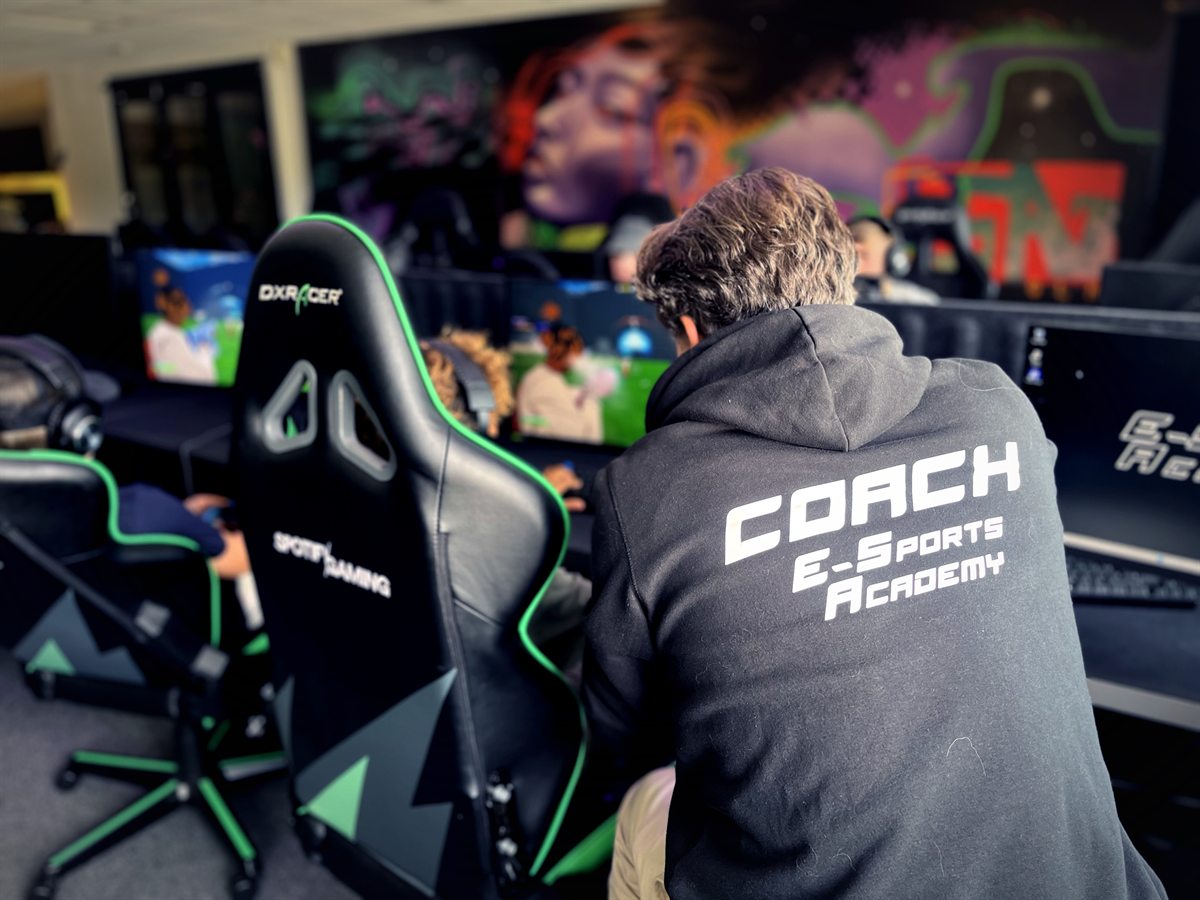
Valorant combines aim and movement with agents, abilities, roles and tactical team play. In our training groups, participants can develop both their individual game and how they work together with a team.
View current esports trainingQUICK FACTS
Communication, roles, abilities, tactics and team play.
Aim, positioning, map control, utility, trades, executes and retakes.
No. Understanding your own role and how it works with the team is more important.
Players who enjoy Valorant and want a more organised way to play and improve with others.
Individual mechanics matter, but Valorant also rewards good decisions, timing, communication and cooperation.
A player who understands when to use an ability, how to support a teammate and when to take or give up space can have a major impact on the round.
That is why training can combine individual skills with the way the whole team plays together.
Movement, crosshair placement, fights and becoming more consistent mechanically.
Understanding what different agents contribute and what your role needs to accomplish for the team.
Using abilities with a purpose to take space, defend areas and create advantages for teammates.
Playing close enough to help teammates, trading fights and coordinating actions.
Working together when entering a site, defending after the plant or retaking an area.
Giving clear information, making useful calls and helping the team make decisions together.
Valorant's agents have different abilities and roles, which means players can contribute to the team in different ways.
Training is not about forcing everyone to play the same way. It is about understanding what your agent can do, what the team needs and how the different roles work together.
As players gain more experience, they can also learn to adapt their choices to maps, teammates and opponents.
FOR PARENTS
Valorant is an online team game where communication and attitude have a major impact on the experience.
The leader's role is not only to help participants improve at the game, but also to create a setting where respect, communication and team play matter.
Information for parentsCurrent Valorant groups, formats and available places are shown on the esports training page.
View current esports trainingFAQ
No. The important thing is finding a group with a suitable level and focus. The training is especially useful for players who want to learn and improve together with others.
Training can include aim, positioning, agents, abilities, map control, communication, trades, executes, retakes and team play.
No. Players can start with the agents and roles they are comfortable with and gradually build a broader understanding of the game.
Both games involve aim, tactics, communication and team play, but Valorant also places a major emphasis on agents and their unique abilities.
It can vary between groups. Current information is shown on the esports training page.
Current groups and available places are shown on the esports training page.